Notes from the Edge of a Drum Circle
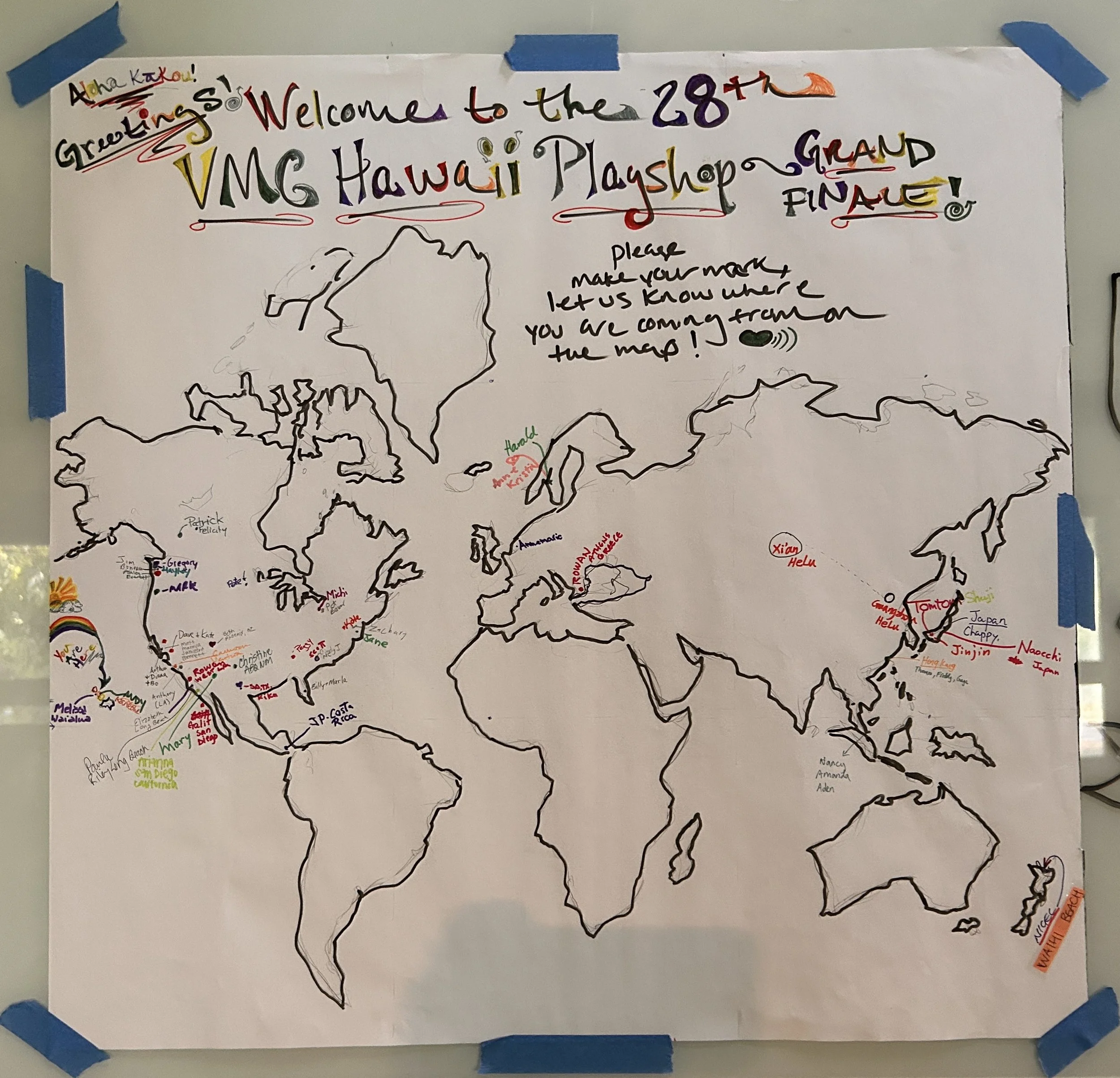
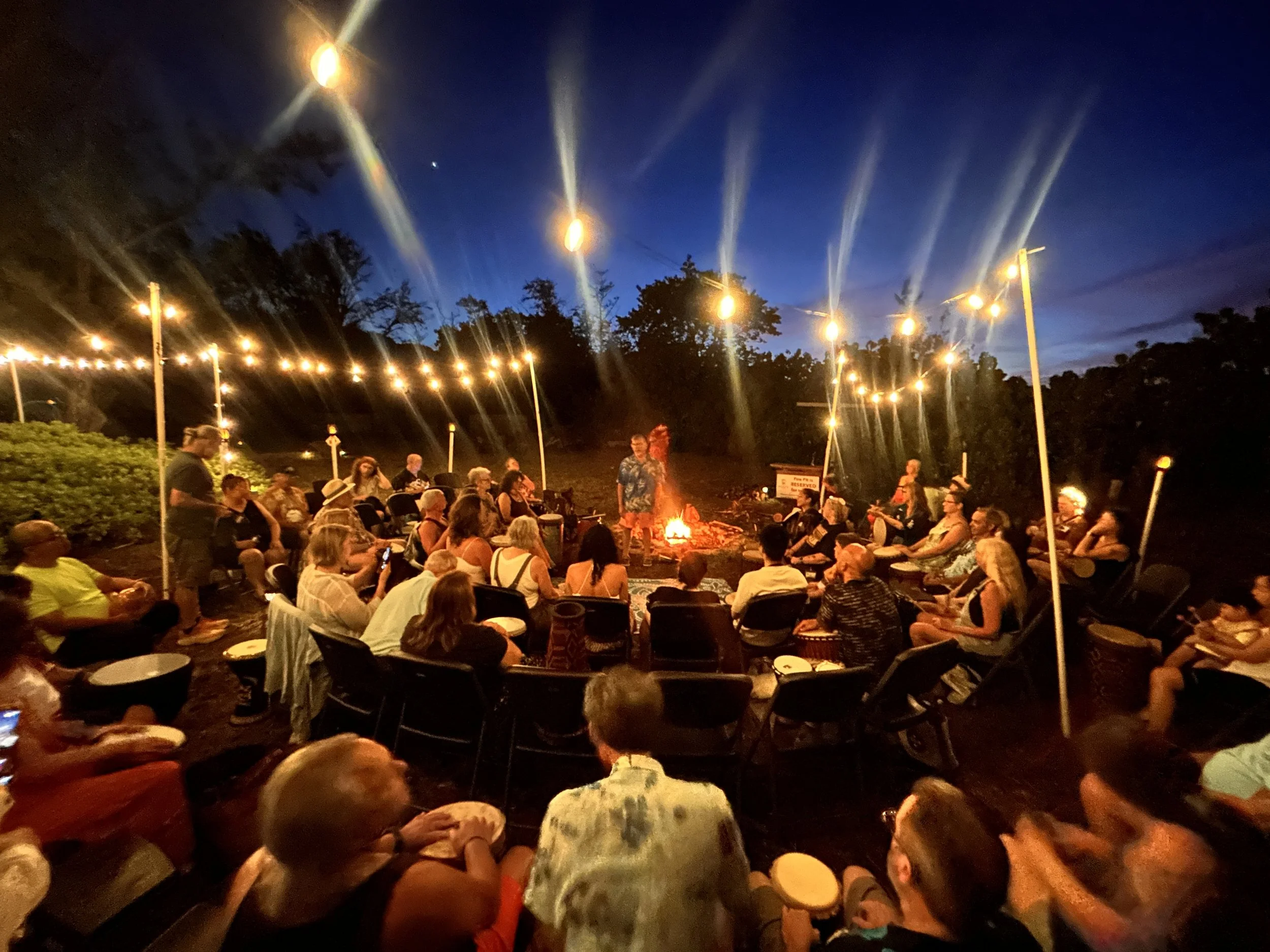
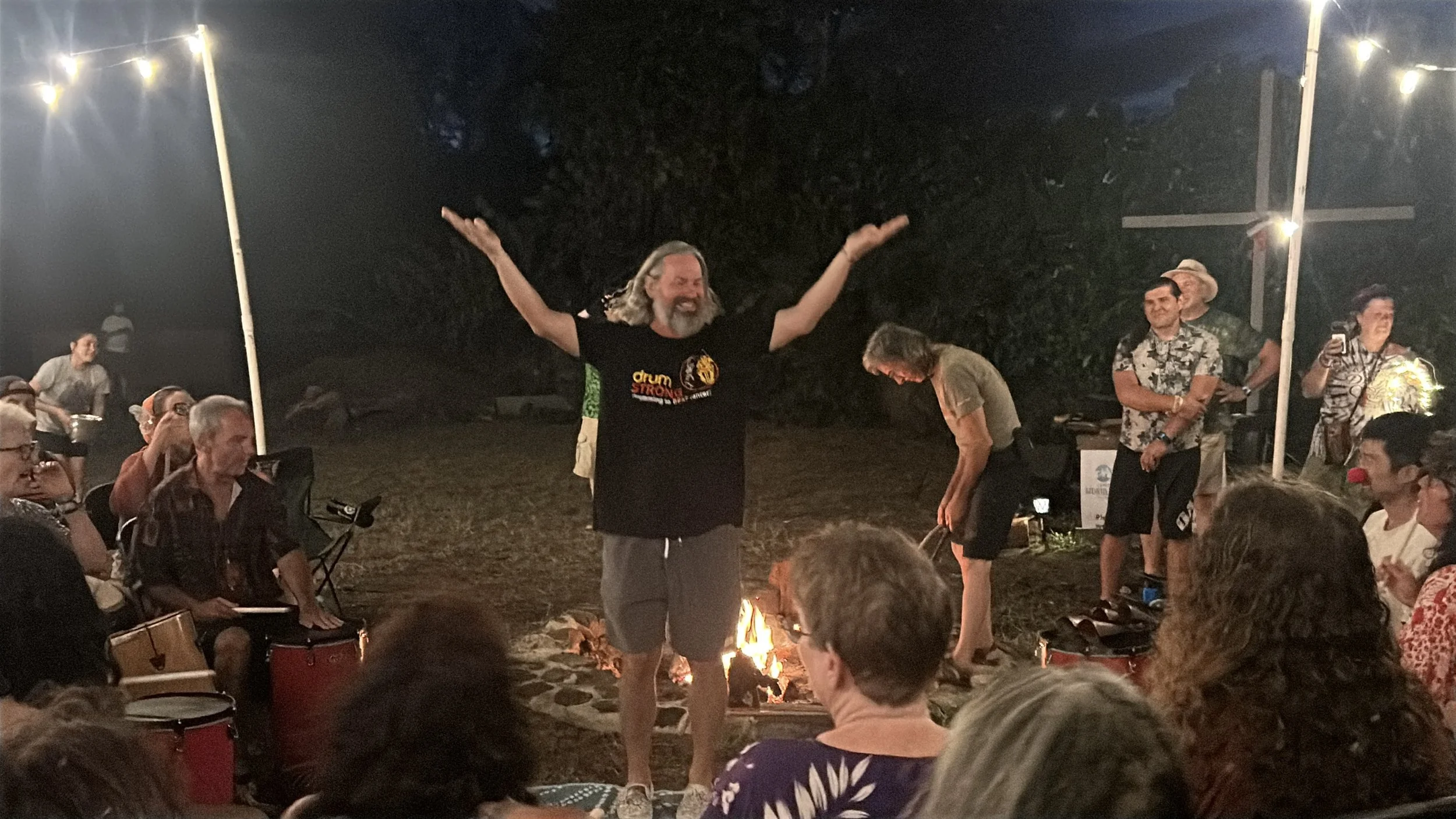
I’m in Hawaii at the 28th annual Village Music Circles Hawaii Playshop, mostly along for the ride while Dave is fully in his world. There are more than 60 people here from all over the world - here to deepen their practice of using rhythm and drum circles to facilitate human potential. I’m working some, relaxing some, wandering in and out of sessions, having meals with people, and watching.
I’ve done this before - traveled with Dave to this event - and I really love it. I so rarely get the chance to simply be a witness. As a facilitator, in a room full of people doing something together, some part of my brain is tracking what is happening and feeling responsible for some piece of it. Honestly, that’s how I am even when I’m not working. Here, none of it is mine to hold. What a gift it is to rest.
So these are mostly just some things I’ve been thinking about while I’ve been here watching people drum, learn, and connect. It’s hard for me not to translate what is happening around me into my work supporting systems changing and people and communities growing.
Practice
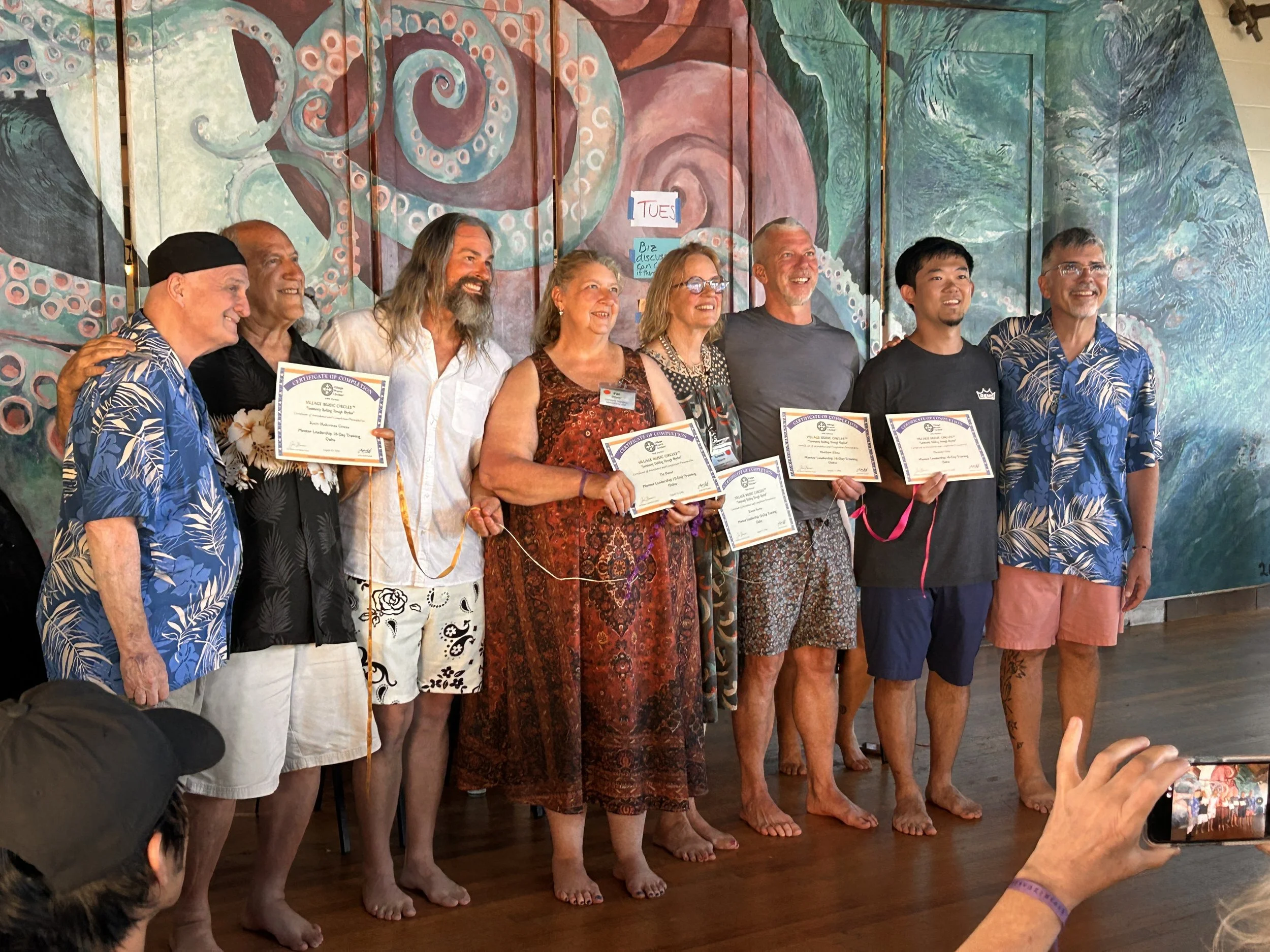
There are some designations here. Among them are Mentor and Mentee. I watched a session the other day where the mentors left, and the mentees stayed behind to practice facilitating a drum circle on their own. They were so impressive, and not because everything was polished or perfect. You could see them trying things, figuring things out, paying attention to what the circle was giving back to them, and deciding what to do next.
The mentors left. I think the part that has stayed with me most.
I spend a lot of my life developing leaders who are working in very complex systems. I believe in teaching and coaching and modeling and frameworks and feedback. I’m sure my clients are reading this thinking, “ya, she does! (insert eyeroll here).” But I was reminded that eventually people need room to find out what they can do. They need to make choices that may not be the choices I would make and then have the experience of seeing what happens. There are things you just can’t learn while someone more experienced is standing beside you making sure you get them right.
I think sometimes those of us who develop people can become so invested in helping them succeed that we accidentally take away some of the conditions they need in order to grow. Oh my gosh… is anyone else also thinking about parenting right now?! I am.
Practice has to include the possibility of not getting it right. And to create the conditions for people around you to grow, apparently, sometimes means leaving the room.
Agency
During one lunch, Dave’s colleague, Cindy, said that everyone in the circle has agency.
I’m still turning that over in my head because I really love it, although I’m not sure I know exactly what I want it to mean yet.
Obviously everyone doesn’t have equal power or equal influence. The facilitator has a particular role. Experience matters. Confidence matters. All the usual human dynamics don’t magically disappear because everyone is sitting in a circle. But everyone does seem to have some genuine capacity to affect what happens next.
The facilitator isn’t making the music while everyone else follows. Someone offers a rhythm and maybe other people pick it up, or maybe they don’t. Someone changes something slightly and it begins to move around the circle. Everyone is listening while contributing, and the thing they are making together is constantly being influenced by the people who are making it.
Of course, because I am me, I start thinking about complexity while everyone else is playing drums. I spend a lot of time thinking about participation, inclusion, community voice, shared leadership and all the other words we use when we talk about bringing more people and voices into the work. Cindy’s comment has me wondering if this kind of agency is offering a more demanding test of me/us.
We can invite people to participate without giving them much ability to affect anything. We can listen very carefully and still reserve for ourselves the right to decide what matters. Maybe agency has something to do with knowing that what each of us brings has a genuine possibility of changing what happens next.
I’m not totally sure where I’m going with that yet.
Curiosity
Jim Boneau is here, and I bought his book, The Rumble Zone. There’s something fun about reading someone’s book while they’re also wandering around the same gathering, eating meals and talking with people. Jim is such a cool dude, and we’ve had a couple nice chats while I’ve been here.
I was reading his chapter on curiosity and underlined this: “If we keep our curiosity at a surface level, we miss half of the equation necessary for authentic transformation.”
That sentence has been working me. I talk about curiosity all the time in my work. Stay curious. Ask another question. Get underneath the story you’ve already made up about someone. Wonder what might be giving you what you see.
But I’ve been wondering about the difference between being curious about someone and being curious enough to actually be influenced by them. I can listen to you. I can want to understand your experience. I can ask thoughtful questions and develop more empathy or compassion for you. All of that matters, and I can also do all of it without anything about me having to change.
What happens when curiosity includes the possibility that something I encounter in you might change me? I don’t know if that’s exactly what Jim means. It’s just what his words are stirring up in me.
It brought back a memory from years ago when Dave and I had the chance to co-facilitate something together. I was talking with a group about leadership and community impact, and Dave was facilitating a drum circle. At some point, a man joined us who appeared to be unhoused and was behaving in ways that suggested he was struggling. I didn’t know his story then and I don’t know it now. But, at some point, he essentially stepped into Dave’s role and started facilitating.
I remember the discomfort in the circle. People continued to play but were definitely exchanging the “what-is-actually-happening-right-now” glances. This wasn’t the person people expected to follow and he certainly wasn’t part of whatever plan we thought we had. I also remember Dave letting it happen. He didn’t immediately step in and take the circle back. He paid attention to what was happening, and people began to follow this man.
I’ve thought about that moment many times over the years. It’s a story about inclusion - someone who might ordinarily have been excluded was welcomed into the circle. But it’s also a story about influence. People allowed him to influence them. Someone they might ordinarily have walked past, avoided, or made assumptions about was affecting what they did next.
I keep putting that memory next to Jim’s words about curiosity and Cindy’s comment about agency. There is a difference between making room for someone and making room for their influence. We can welcome people into our circles without really accepting the possibility that the circle might be different because they are there. I’m sitting with that one.
Jump Time
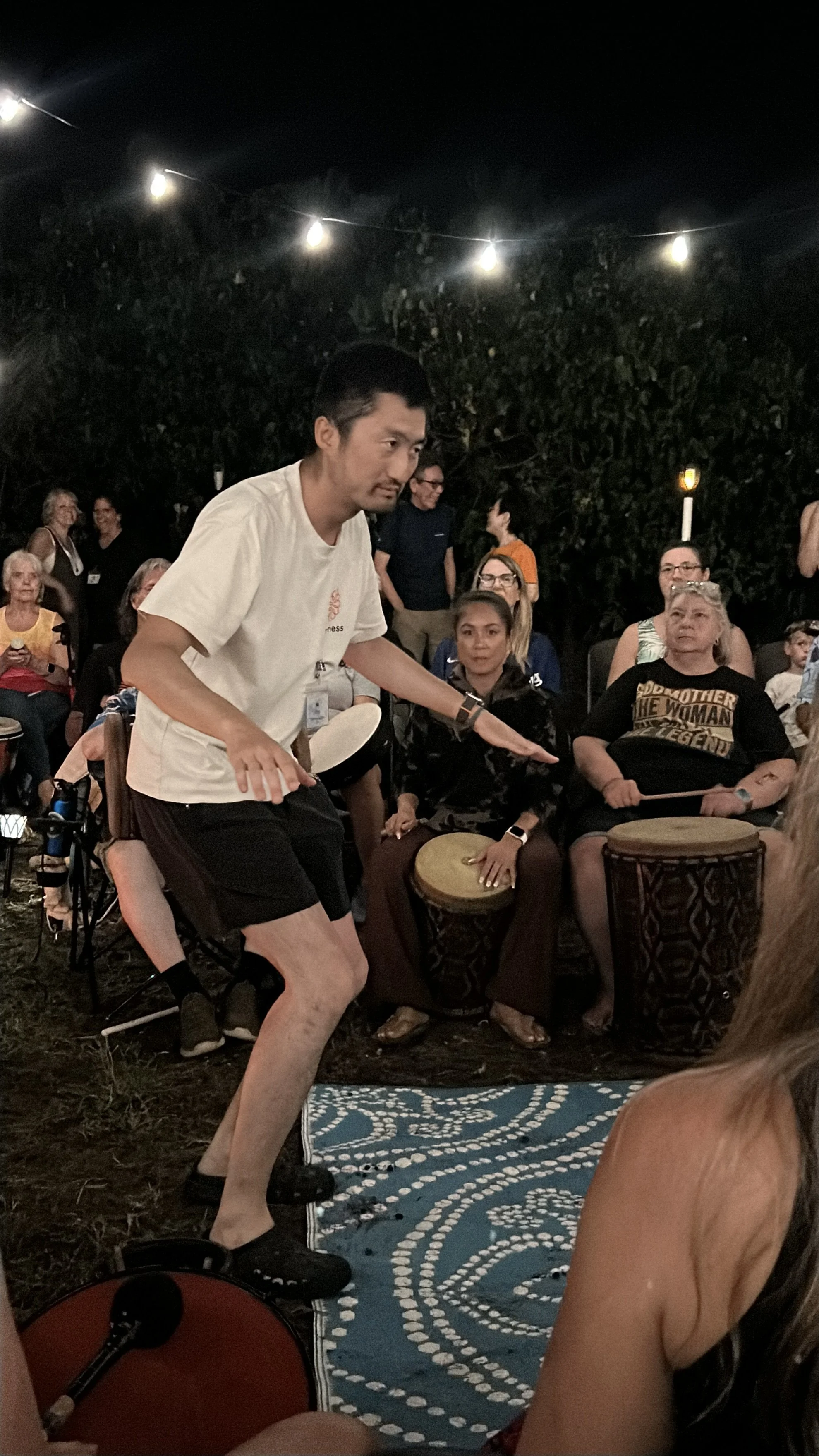
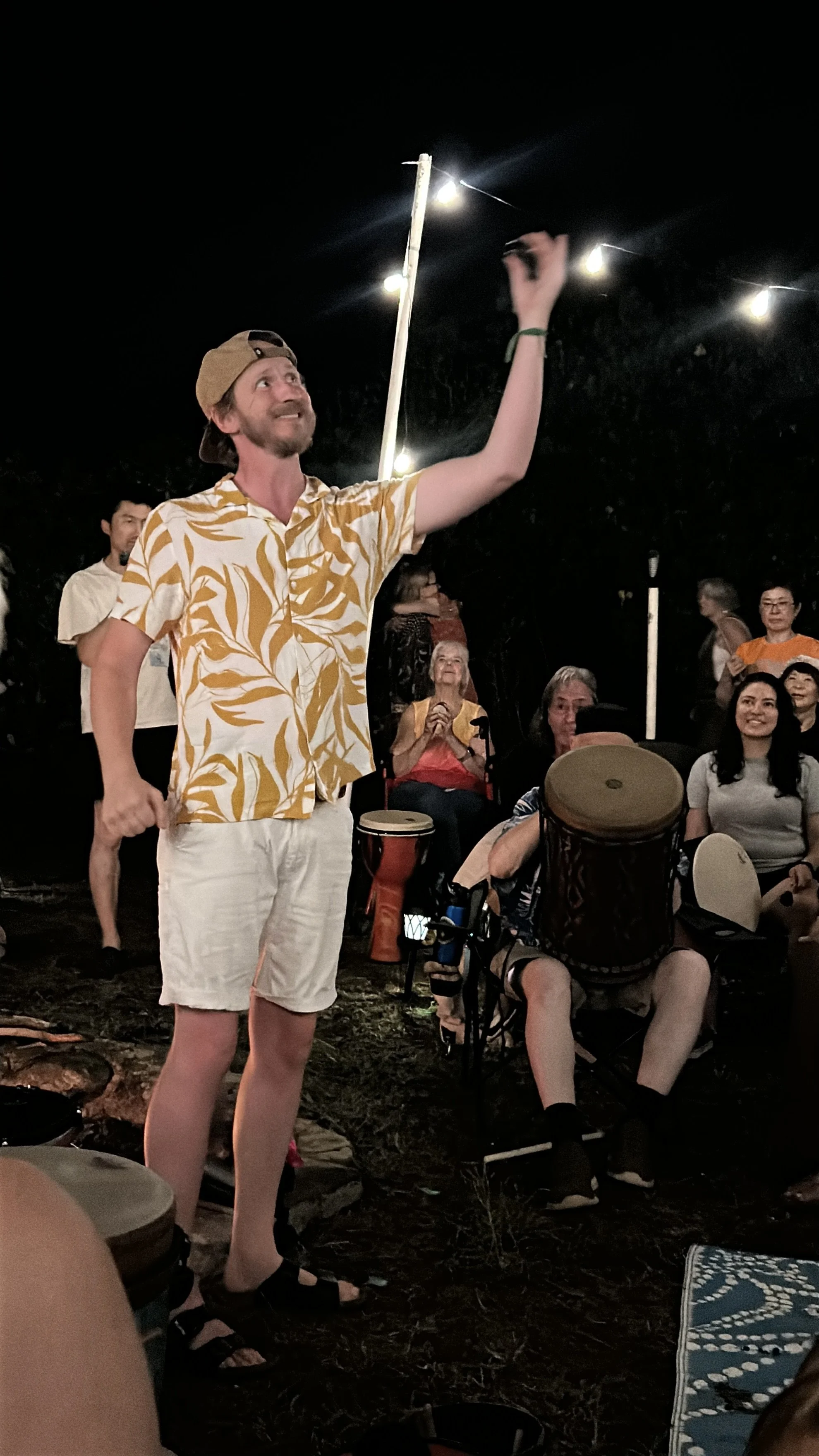
Every day they host something called Jump Time. Everyone gets up to two minutes in the circle to try something they’ve been learning, and then somebody else gets a turn. They get to “jump in”.
People here have come from several different countries. Some have known each other for years and some hardly know each other at all. They have different styles, different levels of mastery, different things they seem drawn to in the craft, and there is room for all of it.
I went last night and it was joyful. People would get into the circle and try something and everyone would just go with them. Some people were incredibly skilled. Some were practicing something newer to them. People did completely different things with their two minutes and it was all met with laughter, encouragement, and courage.
At some point I had this funny realization that I spend months, and sometimes years, working with groups to develop the kind of trust that seemed to be happening all around me. I’m not entirely sure what to make of that. Maybe I should make all my clients sit through a drum circle once a month (kidding, but maybe not).
Obviously these people haven’t somehow bypassed everything we know about how trust develops. I imagine some of what I was experiencing has to do with the 28 years of culture Arthur and Diana and so many others have built here, along with the mentors, the structure, the shared love of the work, the level of risk some might have felt, and probably a hundred other things I can’t see.
But I keep thinking about how safe it seemed to be learning in public. In my work, when people learn in public, they are frequently punished. Elected officials, public employees, etc. When they don’t get it right, regardless of intent, they are blamed. I’m not suggesting they don’t bear responsibility - but when we don’t make it ok to learn, we squash any hopes of growth, innovation, and finding new, more effective ways. But back to the circle last night. At Jump Time, nobody needed everyone to be at the same level. Mastery was appreciated, but so was trying. People could bring very different styles into the circle without needing to decide which one was right. You got your two minutes to offer whatever you had, people helped you make something of it, and then you made room for somebody else. I mean, if all my meetings and system change efforts ran this way, could you even imagine what might be possible?
I spend so much time thinking about how we create enough trust for people to risk being honest, try something they aren’t good at yet, be influenced by one another, and stay in relationship when we are different. Last night I got to stop thinking about it for a little while and experience it. Well, clearly I was still thinking about it, but it was really fun.
Dave
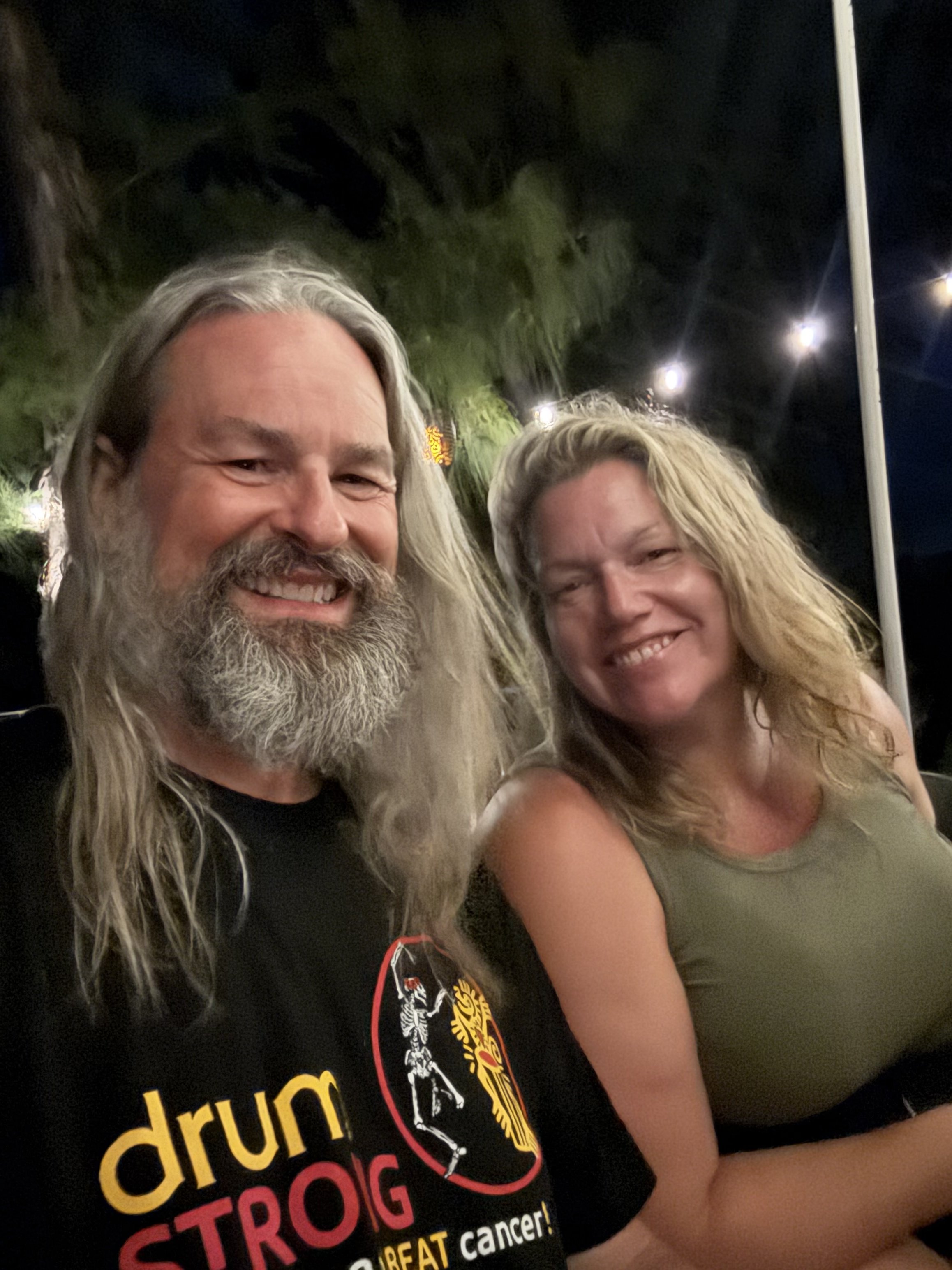
One of my favorite things about being here is watching my husband be someone I don’t always get to see. Not a different Dave. Just Dave in a world that is very much his.
He’s a mentor here, and he has history here, relationships here, and a craft he knows deeply. People know him in ways that are different from how I know him, and I get to watch those parts of him come forward. I get to see him with the mentees, watch people seek him out, see him playing and laughing and being part of this community that means so much to him. There’s something really special about occasionally getting to step into a world that belongs to someone you love. I don’t need it to become my world. I don’t need to love drum circles the way Dave does or experience this gathering the way he does. I’m perfectly happy working for a while and wandering over to see what’s happening, having a meal with people, sitting somewhere on the edge and watching.
We spend so much of our lives with the people we love in the ordinary context of our shared life. We know who they are at home and in all the rhythms we’ve created together. Then every once in a while we get to see them among people who know them differently, doing something that belongs to a part of their life that isn’t really ours. I really like getting to see this Dave.
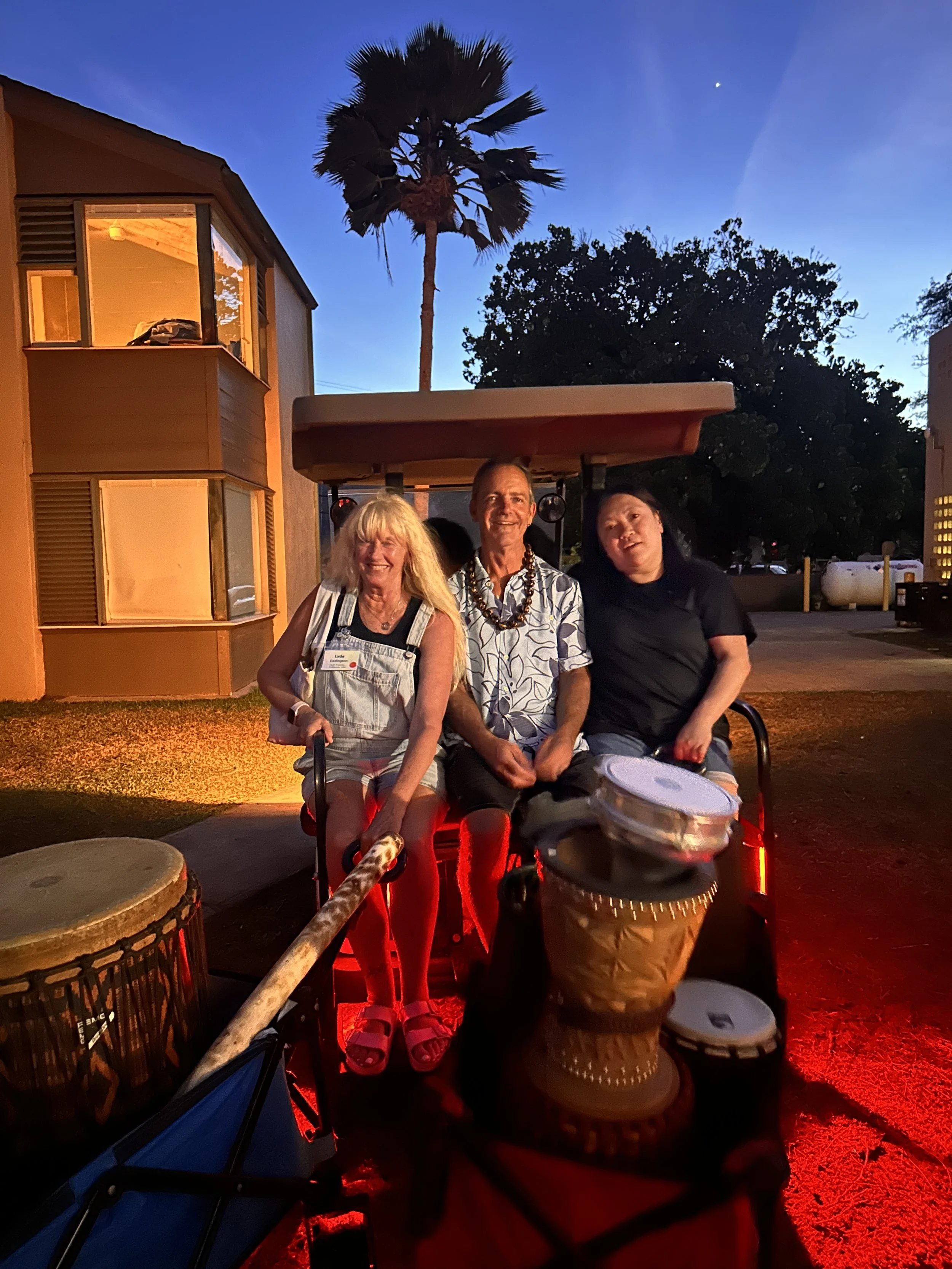
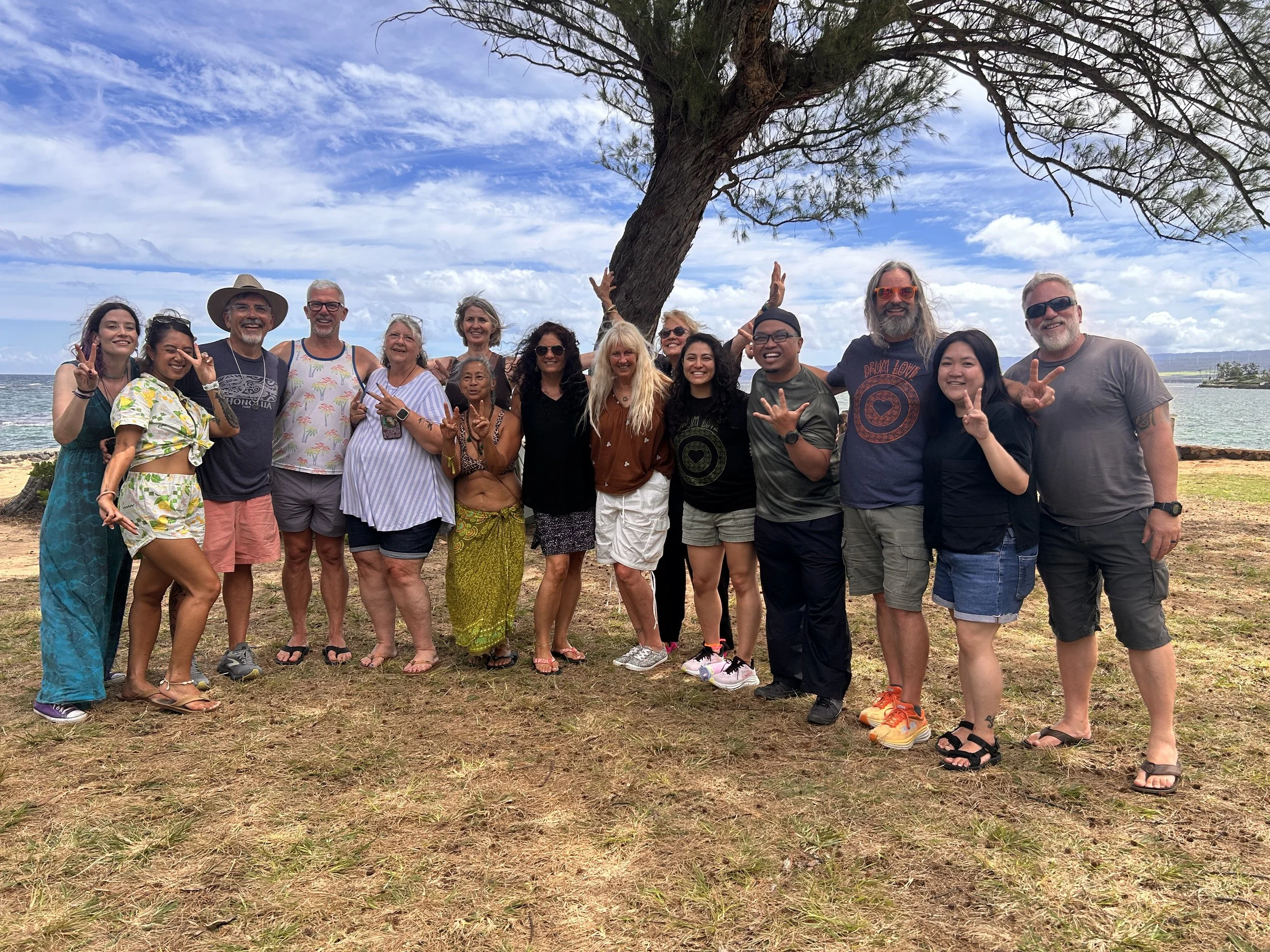
I’ve also loved getting to know the people who are part of this world for him. I’ve had wonderful pockets of time with Matthew, Lyda, Cindy, Pat, Mark, Galit, Kika, Diana, Jim, Maraya and others, sometimes talking about the work and sometimes just talking. People have come here from all over the world, and I really like this little temporary community they’ve created together.
I suppose there’s something about loving someone enough to be interested in a world you don’t need to make your own. Mostly I just feel lucky to get to be nearby and witness him in it.
Endings
Last night was the closing ceremony. Arthur Hull and his wife Diana have been hosting the Hawaii Playshop for 28 years, and this is the last one.
In the ceremony, Diana said, “We worked together. We listened. We responded to the changing needs. That’s been our strength. It takes a village.”
Arthur said, “It’s not going to end. It’s going to transform. It’s going to live on.”
There is something about intentionally ending something while you still have the capacity to choose the ending that I find really moving. Twenty-eight years is a long time to hold something like this, and I imagine it would be easy to just keep going until circumstances eventually made the decision for you. Until someone couldn’t do it anymore, or the energy wasn’t there, or something happened that forced the ending.
Instead, they get to tend to it with great intention. Everyone knows this is the last time. So they gathered people. They told stories, honored what has happened here, said thank you, and tomorrow they will say goodbye. They also are acknowledging that something they love will not exist in exactly this form again. Jim and I talked about intentional endings while I was here, and I found myself thinking about my grandma who died in June.
We had the chance to honor her and say goodbye while she was still here. I got to tell her what she meant to me, that I loved her, and I know what a gift that was because not everyone gets that kind of ending.
She died, and I’m not going to turn that into some sentimental idea that she didn’t really leave. She did and I miss her. But it’s true that she also lives in me in ways that are very real. There are things I do because of her, things I believe because of her, and probably all kinds of ways she shaped me that I don’t even recognize as coming from her anymore.
I think that’s part of what Arthur’s words reminded me of. The Hawaii Playshop really is ending. This particular thing that Arthur and Diana created and tended for 28 years will not happen again in this form. But then I look around at all these people. People have been coming here for years and then going back to their own communities and countries and circles. They’ve carried things with them, changed them, taught them to other people and made them their own. I know they can try to imagine, but I suspect there is no way for Arthur and Diana (and Jim, Mary, and others) to truly know all the places something that began here now lives.
That’s so cool. I hope they feel proud - like in their bones and souls proud - of what they’ve planted here.
And inevitably I think about my own work, because so much of the work I care about has always felt generational to me. The changes I hope for in communities and systems don’t fit neatly into a strategic plan, a grant cycle, or even a career. Some of what I am working toward I may never see. Maybe the measure of some work isn’t whether it continues. I’m going to start thinking about whether it has changed enough people that it no longer needs me (or Arthur, Diana, Jim, etc) in order to continue.
I don’t have a tidy thought about endings beyond that. I’m mostly sitting with how different it feels to intentionally finish something you love rather than holding onto it until it can no longer continue, and what a gift it is, when we get the chance, to say thank you and goodbye.
And then to look around at all the people carrying pieces of it forward and realize that ending and disappearing were never quite the same thing.